010 · June 15, 2026
Why taste and a human point of view still decide, Runway's AI Festival
Notes from the 4th annual Runway AIFF at Lincoln Center.
- AI
- Principles
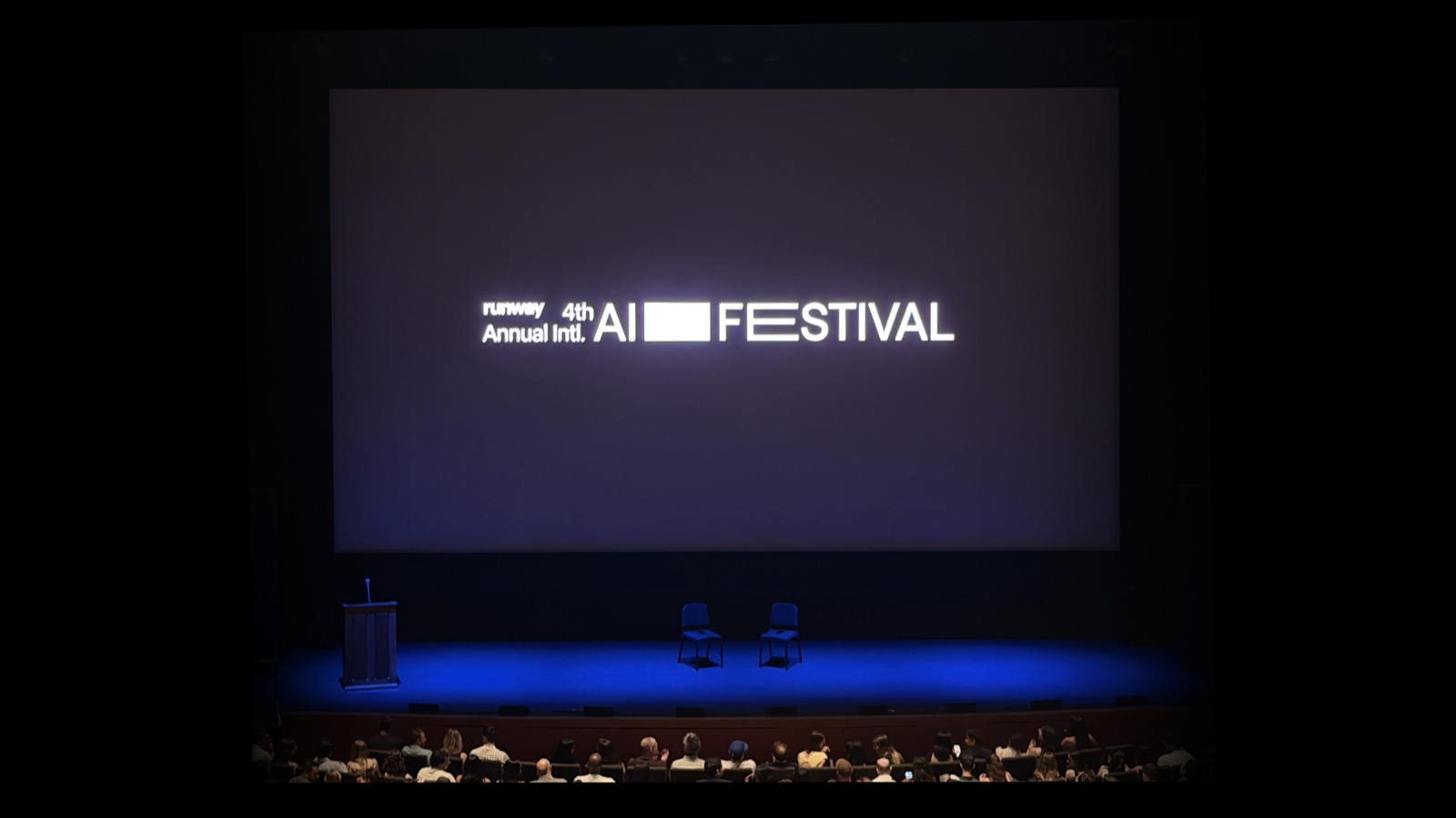
Last week I went to the 4th annual Runway AI Film Festival at Alice Tully Hall at Lincoln Center. It was the first time I've watched AI-generated films on the big screen, and I'll be honest, my expectations were low. I have been experimenting a lot with AI models and there are always clear giveaways that it is AI produced that end up distracting you from the storyline.
Also, as a Balkan girl, I have thick skin. It takes a lot to make me feel something, and I can spot bullshit from a mile away. So I sat down with my arms crossed, waiting to be underwhelmed.
I was not underwhelmed.
Ron Howard's take
Before the films, there was a fireside chat with Ron Howard, the Oscar-winning director, in conversation with Runway's co-CEO Cristóbal Valenzuela. What struck me was how un-defensive Howard was. Most legacy filmmakers treat this technology like a threat; he was one of the few (others to name: Martin Scorsese, Steven Soderbergh) also adopting the technology.
This core point stuck with me: AI may democratize who gets to make a film, but the audience still decides what's worth their time. In his words, it's going to be up to audiences to determine what appeals and what resonates. The tool got cheaper, we're able to iterate at speed, but the bar for moving someone has been raised even higher.
Alright, but none of it prepared me for what the films actually did.
And then Costa Verde
When the short film, Costa Verde by Leo Cannone and New Forest Studio came on, a summer coming-of-age piece, the kind of memory you've half-imagined, told from the perspective of someone older looking back on their own childhood.
It left me in tears.
Not impressed-tears. Actual ones. The technical imperfections I'd been cataloging all night didn't matter, because the thing underneath was working: a story, a point of view, a person reaching for something true and pulling me along with them. That's the part no model generates on its own, a human shaped that. A human chose the nostalgia, the angle, the ache. The AI just helped them build it faster and cheaper than the old way would have allowed.
That's the whole thing, right there. The method, the tools are different, but what hasn't changed is that human creativity has to shape the content in the first place. Someone has to know which story is worth telling and how to take you through it.
Where it still breaks (and I noticed every time)
Let me keep my credibility here, because I watched closely and the seams are real.
- AI still can't fully nail depth. Space and dimension come out slightly flat.
- The subtle stuff is hard: small shifts in angle, the nuance of a face, the way a real camera moves.
- Prop styling and set detail can tip into the uncanny, the moment where you think, what is this, exactly.
- Strangely, animated AI characters often read better than AI humans. Stylized work goes above and beyond, with textures like fur depicted beautifully. But anything “photoreal” gets caught in the gap.
So no, it's not seamless. If you're looking for the cracks, you'll find them.